Productive Capitalism Thrives in Global Rain
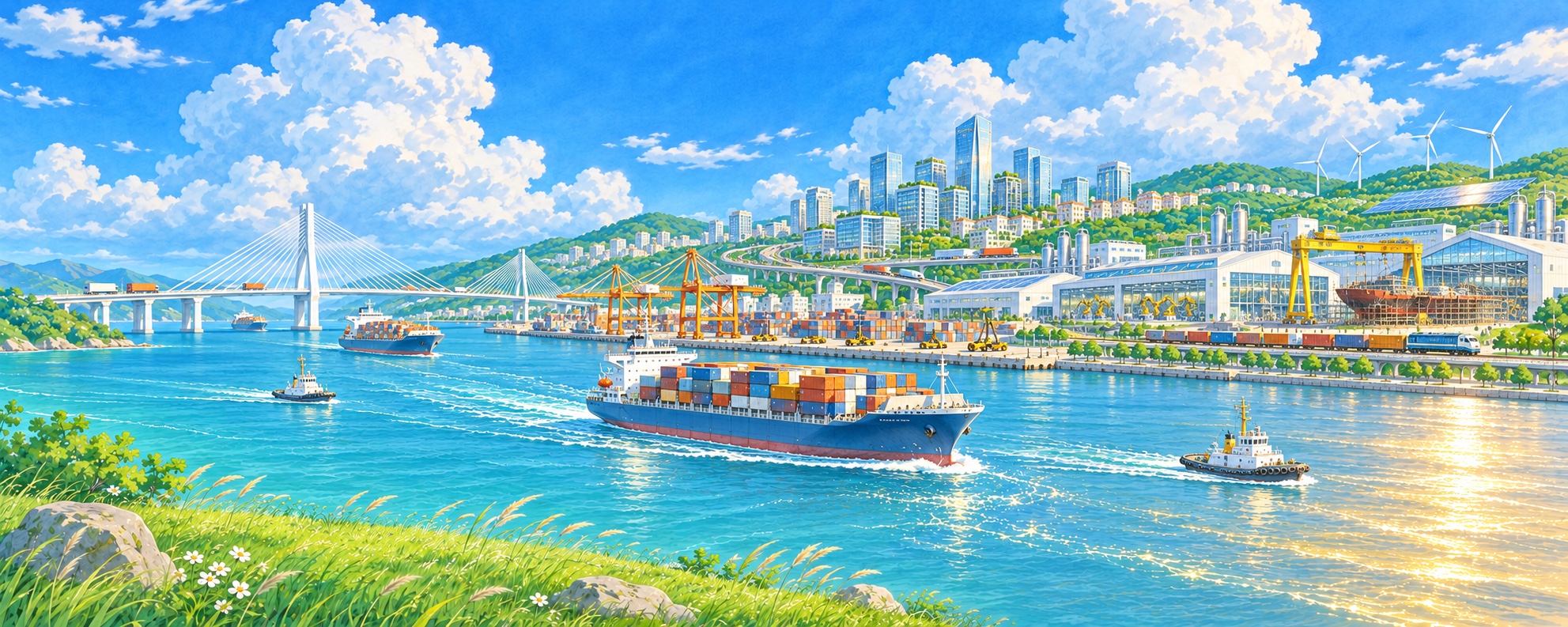
The age of speculative capitalism, fueled by bubbles in intangible assets, is reaching its end. A new wave, a resurgence of tangible output and industrial capacity, is rising to replace it. DeepSeek has disrupted not only the LLM landscape but also signaled a deeper shift in where capital expenditure (CAPEX) is flowing. This redirection of capital is beginning to erode the speculative valuations that defined the last extended bull cycle. Consider the "Magnificent Seven" U.S. tech giants: their combined valuations have ballooned to dominate an outsized share of the U.S. stock market. DeepSeek's ascent may trigger a reevaluation of CapEx in company ledgers, but a structural shift toward concrete output is sure to begin. Welcome to the era of productive capitalism.
At the same time, America's economic vulnerability is shifting. For decades, market risk (the volatility of stocks and bonds) was the central concern. But now, it's fiscal risk that sits in the driver's seat. The U.S. fiscal crisis, marked by unsustainable deficits and political gridlock, has become the defining variable in the country's macroeconomic health. The global financial system once offset America's massive trade deficit with foreign capital pouring into U.S. markets. That dynamic is fraying. When foreign capital becomes wary, whether due to geopolitical tension, better industrial prospects elsewhere, or sheer fiscal instability, the party ends. The story of American exceptionalism must be rewritten.
Maybe a coincidence, but on the day Trump's "Liberation Day" tariffs were announced, sending markets into chaos, I published an article arguing that America's fiscal crisis is rewriting the story of its economy.
America's economic vulnerability has shifted from market risk to fiscal risk, with its budget crisis now taking center stage. Historically, the U.S. could afford its current account deficit (or trade deficits) thanks to a financial account surplus: hot money from overseas pouring into American assets like stocks, bonds, and real estate. But that financial account surplus rests on a single foundation: global faith in U.S. fiscal discipline, its government's ability to repay its debt.
In effect, the U.S. economy has long balanced on a three-legged stool: the current account, the financial account, and fiscal credibility. Now, U.S. Treasuries, once the safest asset in the world, are turning into the riskiest one. The stool starts to wobble.
Market exuberance, once a symbol of economic health, is being eclipsed by the hard math of deficits, debt ceilings, and default scares. This pivot demands a return to trade balance, and that road runs through America's reindustrialization. Tangible goods, services, and real productivity, not financial engineering nor unicorn-style pitch deck economics, will drive the next phase of growth.
We are entering a new industrial era across not just the U.S., but the entire world, developed and developing alike. Silicon Valley's old mantra, "Software is eating the world," has given way to a new reality: manufacturing is eating the world. Even Sam Altman, co-founder of OpenAI, acknowledged in an April 2025 interview that the AI revolution has departed from the internet era and entered a full-blown industrial revolution.
There are painful lessons to recall. Intel, once the embodiment of America's fusion of innovation and manufacturing, stagnated as Wall Street punished long-term R&D. The result? A "Silicon Valley" without silicon. Today, Apple's retreat from its Apple Car project echoes this misstep. Meanwhile, China's BYD, Huawei, and even Xiaomi (once dismissed as a third-tier smartphone maker) are now surging into EV dominance, leaving behind the speculative giants of the last cycle.
Productivity, not hype, now reigns supreme.
A New Global Financial Order Calls for New Chief Architects
Dedollarization is no longer a theory. It's now a movement. Stephen Miran, tapped as Trump's economic advisor, recently remarked that America faces a modern "Triffin dilemma," highlighting the tension between maintaining dollar hegemony and adapting to new trade dynamics.
Across the globe, alternatives to the U.S. dollar as the sole settlement currency are gaining momentum. BRICS nations are piloting a cross-border settlement system called BRICS Pay, while Russia explores pegging a digital currency to commodities like wheat. China is reportedly considering a similar path using broader resource baskets. Europe, meanwhile, advances its digital euro through central bank initiatives. And in the private sector, Bitcoin and dollar-backed stablecoins are actively competing for a slice of the global monetary future.
As these initiatives unfold, a new global financial architecture is emerging, one that demands new chief architects. Not just central bankers, but vision-driven builders. In a telling move, David Sacks, a PayPal Mafia alum and prominent venture capitalist, has been tapped as Trump's "Crypto Czar," tasked with exploring digital currencies as potential dollar alternatives. This time, it won't be Wall Street bankers writing the world's new financial rules. It will be a new breed of pragmatic, tech-native capitalists, the chief architects of productivity, reimagining the rules entirely.
The Two Tidal Engines of Global Growth
During Obama's tenure, the "G2" concept emerged, imagining the U.S. and China as joint hegemons co-managing world affairs. But the idea quickly lost legitimacy. China rejected it outright, favoring a multipolar world over any hegemonic or bipolar structure. Meanwhile, the West dismissed it as unworkable due to irreconcilable ideological clashes and deep strategic distrust.
Yet the deeper flaw in the G2 framework lies in its underlying logic, rooted in the Pareto Principle, or the 80/20 rule, which suggests that one party cannot be better off without another party becoming worse off. It assumes a static, zero-sum worldview, while the real world is more dynamic.
Despite G2's theoretical failure, however, the reality is undeniable: the U.S. and China are the two engines powering global growth today. Their economic momentum, however politically fractured, drives much of the world's prosperity in parallel. G2 may be illegitimate, but it remains an accurate reflection of today's global economic gravity.
Indeed, during a press conference at Mar-a-Lago, Donald Trump stated, "China and the United States can, together, solve all of the problems of the world, if you think about it. So it's very important." He had said as much in Beijing years earlier: if the two nations took on global issues together, "I believe we can solve almost all of them, and probably all of them." His Secretary of State, Marco Rubio, echoed that sentiment, saying the 21st century will "revolve around relations between the US and China."
As someone who has worked within Silicon Valley's startup and venture capital ecosystem, I've observed how these two forces, the U.S. and China, are converging in unexpected ways. Three pictures tell the pattern-forming: in 2015, U.S. tech CEOs flocked to Seattle to meet President Xi ahead of his state visit to Washington, D.C. Fast-forward to 2025: Zuckerberg, Bezos, and other tech titans jetted to D.C. for Trump's inauguration. Just months later, a photo went viral: China's top tech leaders, dubbed the "Chinese Magic Seven," were received by President Xi at the Great Hall of the People.
What these three pictures reveal is more than symbolism. They mark the fusion of political gravity and technological momentum, centered on two great powers. Years ago, I wrote that Silicon Valley was becoming the new Davos, shedding its utopian neutrality in favor of a politically charged reality. The tech industry, once proudly apolitical, has become a barometer for the world's political temperature.
President Kennedy once famously said, "A rising tide lifts all boats." Borrowing that spirit, I propose The Two Tidal Engines: the U.S. and China as the world's twin growth engines. Propelling together, they expand the world's horizons and carry us to new shores.
Take Africa. For centuries, the continent was written off as a story of unsalvageable poverty. Top-down charitable efforts rarely moved the needle. Bringing high-speed internet to every household, for instance, was long considered impractical, requiring massive investments and political coordination, from road construction to infrastructure spending.
But then came the $100 smartphone. When they entered the African market, practically overnight, millions of Africans gained access to the internet. The digital world landed in the palms of the world's most disconnected. This is what it means to expand the horizon, and to arrive at new shores.
Time to pedal with the Two Tidal Engines.
Global Swing States and the Rise of Pragmatic Leadership
Just as swing states decide U.S. presidential elections, a new breed of "global swing states" is emerging on the world stage. These are nations that refuse to fully align with either the U.S. or China, instead choosing a path of strategic flexibility. Countries like India, Indonesia, Turkey, Saudi Arabia, and even parts of the EU are navigating this rivalry not through ideology, but through diplomacy. They are hedging, bargaining, and extracting value by engaging both powers, playing a delicate game of balance in a multipolar world.
What's striking is that this mindset is now mirrored in the business world. Multinational companies, especially unicorn startups like TikTok, are adopting the global swing state logic. They work carefully to avoid being cornered by geopolitical loyalties, building parallel governance structures, dual headquarters, separate data centers, or customized product lines to navigate great-power tensions.
Parallel to this, a new breed of pragmatic political leaders is emerging. Initially spurred by nationalist waves, many have since evolved into realists. These leaders have learned to swing strategically between Washington and Beijing, placing productivity and economic gain above ideology. These pragmatic emerging world leaders are reshaping geopolitics not through confrontation, but through calculated coexistence.
Who Are They? The New Venture Capitalists, Stewards of Productive Capitalism
As 2025 dawns, the old world is phasing out while the new one is yet to be defined. In this moment of transition, chaos breeds as many extraordinary opportunities as it does great threats. We are continuously reinventing computing, this time through an all-encompassing integration of hardware and software. Energy will be made more abundant and efficient. Medicine and healthcare are being reimagined, alongside education, logistics, and governance. A new world financial system is taking shape: decentralized, distributed, and globally resilient by design. These are just a few domains of opportunity in this vast techno-financial realignment.
When technology and financial systems take new shape, an ideological realignment often follows suit. And where ideology shifts, so too does culture. That means yet another industry is ripe for disruption: media and entertainment. A new Hollywood is inevitable.
Stepping into the vacuums left by old institutions, the new venture capitalists are not just early investors in these emerging sectors. They are the chief architects of the world's next chapter.
These new venture capitalists are masters of productive capitalism: individuals who understand capital placement not only through stock tickers and CapEx balancing, but also via machines, factories, energy flows, industrial scaling, and sovereign resilience.
They are the stewards of reindustrialization, helping bring AI from software abstractions into the physical world: into chips, robots, gigafabs, and a whole new computing infrastructure. But their role doesn't stop at the factory gate. In this new world in the making, where dedollarization, multipolarity, and pragmatic geopolitics collide, a new generation of venture capitalists is poised to shape emerging financial systems.
They are the quiet advisors, the ear-whisperers, to the new generation of pragmatic world leaders. They think like sovereign actors, serving as intermediaries between global swing states. They possess the ability to discern private truths before they become consensus, to detect lies before they become policy, and to turn conviction into coordination.
Most importantly, they interpret and grasp the pulse of the Two Tidal Engines, carrying the world to new shores.